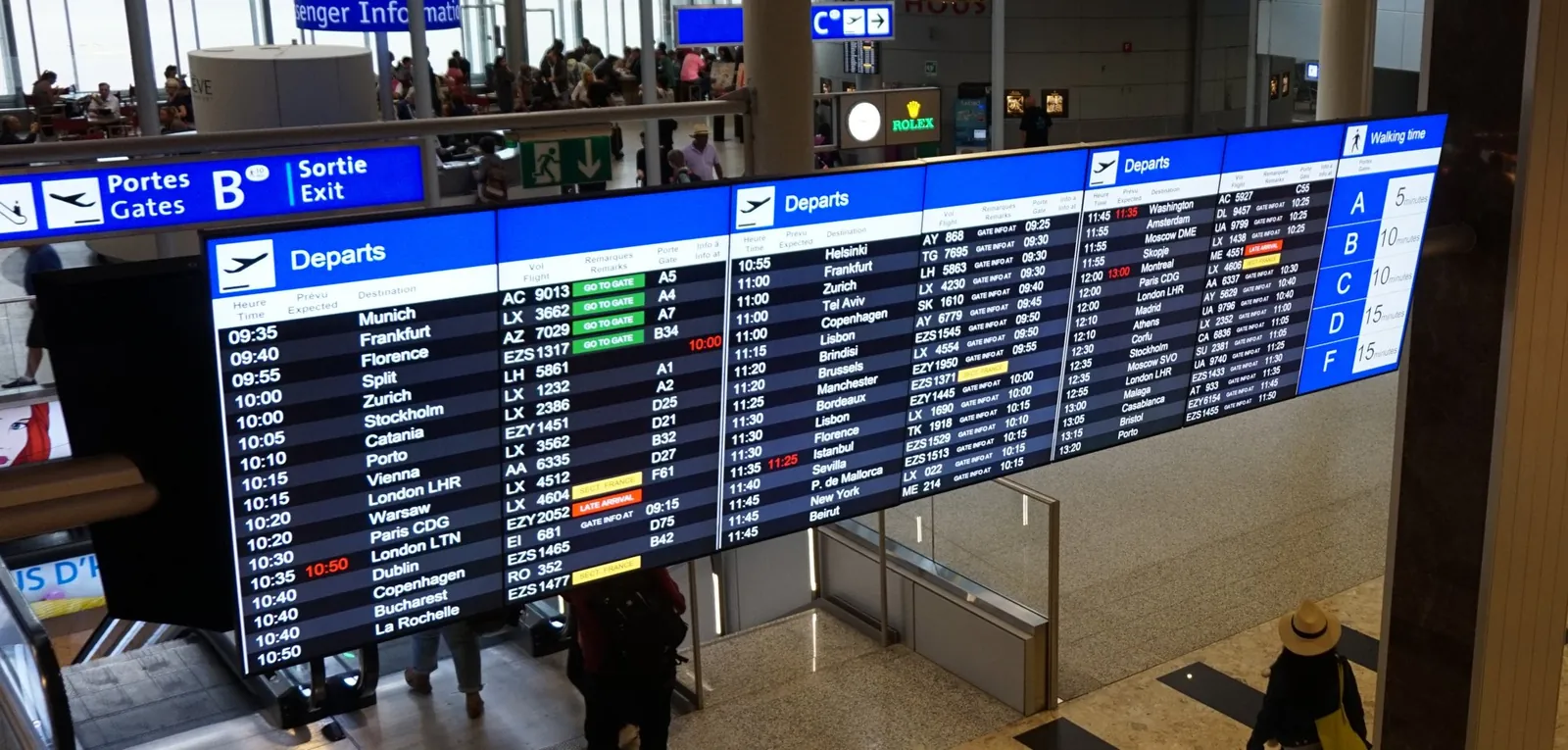
If your flight was canceled or significantly delayed by Friday's FAA ground stop and you chose not to travel or accept an alternative, DOT rules entitle you to a refund regardless of the reason. Airlines generally do not have to pay for hotels or meals when the cause is an air traffic control problem outside their control.
Key facts: DOT rules require a refund for canceled or significantly delayed flights if you decline rebooking, vouchers or other compensation. · If you took the rebooked or delayed flight, you are not entitled to a ticket refund under DOT rules. · Business interruption coverage typically requires direct physical damage, which a ground stop by itself generally does not involve.
On Friday, Nov. 13, 2026, the Federal Aviation Administration halted departing flights at U.S. airports after what federal officials described as a temporary telecommunications outage in the air traffic control system. The FAA's initial announcement came at 3:54 p.m. Eastern, and the agency reopened the skies at 8:15 p.m., ending what BBC News called the longest nationwide ground stop since the Sept. 11, 2001, attacks.
For many households, the disruption carries real costs: canceled trips, unexpected hotel bills and refunds that need tracking down. For businesses that serve travelers, it may mean fewer customers. Here is what officials have said, and how refund rules and insurance coverage generally work after an event like this.
What Officials Said Happened, and What They Did Not Confirm
The FAA said it issued the ground stop following communication issues impacting multiple Air Route Traffic Control Centers, and noted that its information was "preliminary and subject to change."
Transportation Secretary Sean Duffy attributed the outage to older equipment. "So this is analogue telecom. Our switches, our routers actually got overloaded with data and they went down," he said, according to BBC News, adding that communications and radar were affected. CNBC reported that Duffy said the overloaded routers began giving air traffic control centers inconsistent information. Homeland Security Secretary Markwayne Mullin said the introduction of some new technology into an old air traffic control system had overwhelmed it.
Questions about hacking surfaced quickly. So far, officials have not confirmed a cyberattack, and Mullin was direct: "We have seen zero evidence that this is a cyberattack or an SI attack." He did not close the door entirely: "we're still looking, so we're not going to rule that out," Mullin told reporters, according to SecurityWeek, which reported that no official root cause had been announced. He also ruled out any link to the global Microsoft outage that began on Thursday. Both cabinet secretaries said the public was never in danger.
The disruption was wide. Citing flight-tracking site FlightAware, CNBC reported about 9,000 U.S. flight cancellations and more than 7,000 delays on Friday, though some of those were due to bad weather. As of 5:45 a.m. ET Saturday, more than 3,000 U.S. flights had been canceled and close to 1,000 delayed, according to FlightAware. Duffy said tens of thousands of people were stranded and that it would take time to unwind.
Nothing officials have said indicates that personal data was exposed. If officials later confirm a breach of personal information, the federal government's IdentityTheft.gov is the place to start.
Your Refund Rights If Your Flight Was Canceled or Significantly Delayed
Under U.S. Department of Transportation rules, you are entitled to a refund if the airline canceled your flight, regardless of the reason, and you chose not to travel or accept travel credits, vouchers or other compensation. The same right applies to significant delays and changes. DOT counts the following as significant:
- Arriving 3 or more hours late on a domestic itinerary, or 6 or more hours late on an international one
- Departing that many hours earlier than originally scheduled
- A change in origin or destination airport
- More connections than the original itinerary
- An involuntary downgrade to a lower class of service
Fees for services you paid for but couldn't use, such as bags, seats or Wi-Fi, must also be refunded when the service was unavailable through no fault of your own, including when the airline cancels the flight.
Airlines must notify you about cancellations and significant changes and your right to a refund. For tickets bought from the airline, the refund is automatic, due within 7 business days for credit card purchases or 20 business days for cash purchases after the airline becomes aware that you don't accept the alternative. If you do accept a credit or voucher instead, it must be valid for at least five years.
If you booked through a travel site or agent, the merchant of record, meaning the company that appears on your card statement, is responsible for refunding the airfare. Optional service fees are requested from the airline.
CNBC reported that airlines offered customers travel waivers. Terms vary by airline, so check your carrier's official app or website.
Ticket Refunds Are Not the Same as Hotel and Meal Coverage
A refund covers the ticket you didn't use. Costs you ran up while waiting are a separate question. DOT says you may be entitled to compensation for certain expenses or amenities if the delay was due to something in the airline's control. An air traffic control failure generally does not fit that description. As BBC News summarized, in the U.S. there is no requirement for airlines to provide meal vouchers or accommodation for air traffic control problems, though some may offer complimentary support.
To see what your airline has committed to, review its customer service plan or DOT's Airline Cancellation and Delay Dashboard. DOT notes those commitments do not affect your entitlement to a refund.
The Fine Print: If you chose to take the significantly delayed flight or the alternative flight the airline offered, you are not entitled to a ticket refund under DOT rules. And because Friday's disruption stemmed from an FAA air traffic control problem rather than something within the airline's control, U.S. rules generally do not require airlines to cover hotels or meals.
Where Travel Insurance May Fit In
If you had travel insurance, your policy may help with costs your airline won't cover. According to the National Association of Insurance Commissioners, trip cancellation, interruption and delay coverage reimburses prepaid, nonrefundable travel expenses if you're prevented from taking all or part of a trip, and some policies may pay for an overnight hotel stay after a flight delay. NAIC lists an issue with your airline and a flight delay requiring an overnight hotel stay among examples of covered reasons.
Every policy is different. NAIC notes that each policy sets its own limits and lists the specific situations it will or won't cover. Keep receipts for any hotel or meal costs you plan to claim.
Some credit cards include trip cancellation coverage, so it's worth checking your card's benefits. For future trips, NAIC says policies usually cost 5% to 10% of the total trip price. Cancel For Any Reason is a separate add-on that typically reimburses only 50% to 75% of costs.
Timing matters. NAIC warns that if you wait until a storm has been named, your policy likely won't cover claims related to it. California's insurance department says the same idea, that you cannot buy fire insurance for a currently burning house, applies to other active emergencies. Your state insurance department can answer questions about travel insurance.
What Local Businesses Should Know About Business Interruption Coverage
Hotels, restaurants and event vendors that depend on arriving travelers may have seen fewer customers Friday and into the weekend. Business interruption insurance, also called business income insurance, can help with expenses such as lost net income, rent, loan payments and payroll during a restoration period.
The trigger matters, though. The California Department of Insurance says business interruption policies generally require a direct physical loss or damage to a property caused by a covered peril, such as fire or water damage. Civil authority coverage, according to the Insurance Information Institute, applies when a government order prohibits access to your premises as a result of physical damage to an adjacent or nearby property, and typically does not exceed two consecutive weeks. Policies also commonly have a 48- to 72-hour waiting period.
An FAA ground stop, by itself, is generally not the kind of physical damage these consumer guides describe. Owners should read their own policy, talk with their agent or broker, and contact their state insurance department with questions.
Watch for Scams, and How to Complain If a Refund Doesn't Arrive
Mass cancellations can create openings for scammers posing as airlines with fake rebooking or refund messages. CISA notes that phishing is often designed to look like it comes from a trusted organization and frequently uses urgent language. The guidance from the FTC is consistent: never click on links or respond to unexpected texts, and contact the company using a phone number or website you know is real. Forward spam texts to 7726 (SPAM) and report scams at ReportFraud.ftc.gov.
If a refund doesn't arrive, start with the airline. DOT requires airlines to acknowledge complaints within 30 days and send a written response within 60 days. If that doesn't resolve it, you can file a complaint with DOT. DOT will direct the airline or ticket agent to respond to you, though except for civil rights complaints, it does not investigate every individual complaint.
Have a question about refunds, travel insurance or business coverage after Friday's disruption? Send it to us here.
This article is for general education only and is not insurance, legal or financial advice. Policy terms and airline commitments vary, so check your own documents and official sources.
Sources:
- FAA, "FAA Statement on Nationwide Ground Stop"
- U.S. Department of Homeland Security, "ICYMI: Secretary Mullin and Secretary Duffy Address Nationwide FAA Ground Stop of All Flights"
- BBC News, "What we know about the US ground stop and what to do if your flight is affected"
- CNBC, "FAA ground stop lifted but U.S. flight disruptions continue"
- U.S. Department of Transportation, "Refunds"
- U.S. Department of Transportation, Airline Cancellation and Delay Dashboard
- U.S. Department of Transportation, "File a Consumer Complaint"
- NAIC, "Travel Insurance"
- NAIC, "Should I Get Travel Insurance?"
- California Department of Insurance, "FAQ on business interruption insurance"
- Insurance Information Institute, "Do I need business interruption insurance?"
- CISA, "Recognize and Report Phishing"
- FTC, "Top text scams of 2024"
- FCC, "Stop Unwanted Robocalls and Texts"
- SecurityWeek: No Signs of Hacking in FAA Ground Stop (Nov. 2026)
- IdentityTheft.gov
Frequently asked questions
Can I get a refund if my flight was canceled because of the FAA ground stop?
Yes. Under DOT rules, you are entitled to a refund if the airline canceled your flight, regardless of the reason, and you chose not to travel or accept credits, vouchers or other compensation.
What counts as a significant delay for a refund?
DOT counts arriving 3 or more hours late on a domestic itinerary or 6 or more hours late on an international itinerary as a significant delay. Departing that much earlier, a change of airports, added connections and an involuntary downgrade also count.
Does the airline have to pay for my hotel after the ground stop?
Generally no. DOT links expense and amenity compensation to delays within the airline's control, and U.S. rules do not require meal vouchers or accommodation for air traffic control problems. Some airlines may offer help anyway, so check your airline's customer service plan.
Was the outage confirmed as a cyberattack?
No. Homeland Security Secretary Markwayne Mullin said officials had seen 'zero evidence' of a cyberattack. Officials attributed the outage to older telecommunications equipment being overloaded, and the FAA called its information preliminary.